

For overseas buyers standards, buying agricultural commodities from Nigeria involves more than agreeing on a price and quantity.
Also, before a shipment is accepted, buyers may assess the physical quality of the commodity, moisture, foreign matter, defects, contamination risks, packaging, documentation, traceability and compliance with the requirements of the destination market.
The exact requirements vary according to the commodity, destination country, intended use and contract.
Nevertheless, this guide explains the main quality parameters buyers should discuss with Nigerian suppliers when sourcing cocoa, cashew and sesame, and the main import checks that can affect whether a shipment is accepted at destination.
What Overseas Buyers Usually Check
International buyers commonly evaluate five areas:
- Product quality
- Food safety
- Phytosanitary and pest controls
- Documentation and traceability
- Destination-country import requirements
A commodity can meet a Nigerian export specification and still require additional testing or documentation before it can enter another country.
That distinction is important.
Nigerian export authorities conduct quality and compliance checks before export, while destination-country authorities determine whether the shipment can legally enter their market.
Nigerian Export Quality Checks
Nigeria’s Federal Produce Inspection Service (FPIS) conducts inspection and quality control of agricultural produce intended for export. Its procedures include arrival and shipment check-tests, moisture testing, packaging inspection, weighing and fumigation controls.
The Nigeria Export Promotion Council (NEPC) also identifies documents such as phytosanitary certificates, fumigation certificates, Clean Certificates of Inspection, certificates of weight and quality, certificates of origin and shipping documents as part of the formal export process, depending on the commodity and transaction.
For plant products, the Nigeria Agricultural Quarantine Service (NAQS) is responsible for phytosanitary inspection and certification for export and works within international plant-health requirements.
The important point for buyers is that quality should be verified against the actual purchase specification and destination requirements, not just a general description such as “export quality.”
Cocoa: What Overseas Buyers Check
Cocoa buyers typically pay close attention to bean condition, fermentation, moisture, mould, slatey beans, insect damage, foreign matter, bean size and other defects.
Nigeria’s published cocoa quality parameters distinguish between Grade I and Grade II and include limits for mouldy beans, slatey beans, other defects, bean size, moisture and foreign matter.
Cocoa Quality and Import Reference
| Parameter | What the Buyer Checks | Nigerian Reference Point | Why It Matters |
|---|---|---|---|
| Grade | Grade classification and consistency | Grade I / Grade II | Determines commercial quality and price |
| Moisture | Moisture level of the beans | Up to 7.5% in the published Nigerian cocoa specification | Excess moisture increases storage and mould risks |
| Mouldy beans | Visible mould and defective beans | Grade I: max. 3%; Grade II: max. 4% | Important for quality and food-safety control |
| Slatey beans | Degree of under-fermentation | Grade I: max. 3%; Grade II: max. 6% | Indicates fermentation quality |
| Other defects | Insect-damaged, germinated and flat beans | Limits vary by grade | Affects usable yield and quality |
| Bean size | Consistency of bean size | Published specification allows not more than 12% outside the relevant range | Influences processing characteristics |
| Foreign matter | Stones, debris and other unwanted material | 2% max in published Nigerian reference | Reduces contamination and cleaning risk |
| Packaging | Clean, suitable export packaging | Clean jute bags are referenced | Protects cargo during storage and transport |
| Pest condition | Evidence of infestation | Must meet export inspection requirements | Important for quarantine and cargo acceptance |
| Fumigation | Appropriate pest-control treatment | Required under Nigerian export procedures | Helps control infestation during shipment |
The published Nigerian cocoa profile is a useful starting reference, but buyers should confirm the exact grade and specification in the sales contract and verify any additional destination requirements.
Cocoa Import Checks
For overseas buyers, additional checks may include:
- Moisture testing
- Cut-test or bean-quality assessment
- Mould inspection
- Defect analysis
- Foreign-matter assessment
- Pesticide-residue testing
- Contaminant testing
- Phytosanitary documentation
- Certificate of origin
- Weight verification
- Packaging inspection
- Traceability information
The required tests depend on the destination and intended use.
Cashew: What Overseas Buyers Check
For raw cashew nuts, buyers commonly pay attention to physical condition, moisture, nut count, outturn and kernel yield, defective nuts, foreign matter, infestation and overall soundness.
The exact commercial specification should be agreed before purchase because the term “raw cashew nuts” alone does not establish a complete quality standard.
Cashew Quality and Import Reference
| Parameter | What the Buyer Checks | Typical Commercial Concern | Why It Matters |
|---|---|---|---|
| Moisture | Moisture content of raw nuts | Buyer-specified maximum | Excess moisture can contribute to deterioration during storage |
| Outturn / KOR | Kernel yield obtainable from the nuts | Higher outturn generally supports better commercial value | Directly affects processing yield |
| Nut count | Number of nuts per kilogram | Buyer-specific specification | Helps classify size and commercial grade |
| Sound nuts | Percentage of healthy, usable nuts | Low defective proportion preferred | Indicates overall quality |
| Defective nuts | Immature, mouldy, damaged or otherwise defective nuts | Limits specified by buyer | Affects processing yield |
| Foreign matter | Stones, dirt, sticks and other material | Should be controlled | Reduces cleaning and contamination risk |
| Pest infestation | Live insects or infestation evidence | Should be absent or within agreed limits | Important for storage and quarantine |
| Packaging | Clean and suitable bags | Agreed packaging specification | Protects cargo from contamination and moisture |
| Fumigation | Appropriate pest treatment | Where required | Supports safe storage and export handling |
| Traceability | Source and shipment records | Buyer-specific | Supports supply-chain verification |
A Nigerian trade-information source currently identifies 9% as a maximum moisture level for raw cashew nuts and notes that outturn/KOR is an important commercial measure. Buyers should nevertheless confirm the specification required for their particular contract and destination rather than treating one figure as a universal international limit.
Cashew Import Checks
An overseas buyer may request:
- Moisture analysis
- Nut count
- Outturn/KOR assessment
- Defect analysis
- Foreign-matter assessment
- Mould inspection
- Pest inspection
- Aflatoxin testing where required
- Pesticide-residue testing where required
- Phytosanitary certification
- Fumigation documentation
- Certificate of origin
- Weight and packaging verification
For processed cashew, the requirements can become more extensive because food-safety, processing, labelling and facility requirements may apply.
Sesame: What Overseas Buyers Check
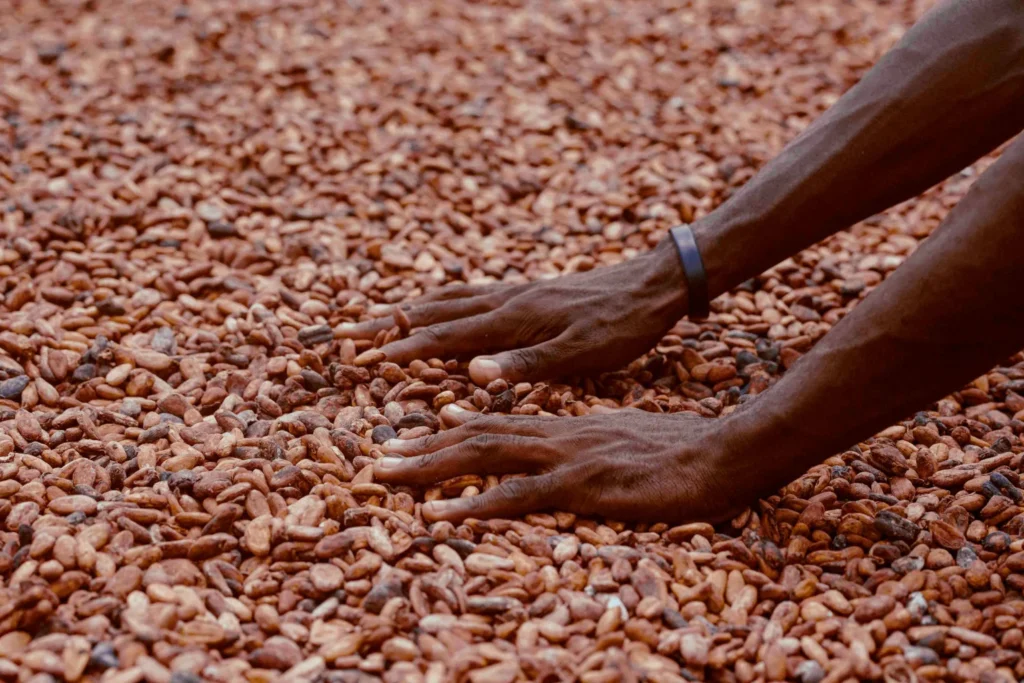
Sesame is particularly sensitive to food-safety and contamination requirements in some international markets.
Buyers commonly evaluate purity, foreign matter, moisture, oil content, colour or variety, cleanliness, infestation and contamination risks.
Sesame Quality and Import Reference
| Parameter | What the Buyer Checks | Nigerian Reference Point | Why It Matters |
|---|---|---|---|
| Purity | Percentage of desired sesame seed | 98–99.5% in NEPC’s published profile | Indicates cleanliness and commercial quality |
| Foreign matter | Stones, dirt, plant material and other contaminants | 2% max in published NEPC profile | Affects cleaning and processing |
| Moisture | Moisture content | 8% max in published NEPC profile | Helps reduce deterioration during storage |
| Oil content | Oil yield potential | 45% minimum in published NEPC profile | Important for oil-processing buyers |
| Colour / variety | White, black, hulled or other agreed type | Must match contract | Determines market suitability |
| Cleanliness | Dust, debris and visible contamination | Buyer specification | Affects processing and food safety |
| Pest condition | Live insects or infestation | Should meet destination requirements | Important for quarantine |
| Packaging | Suitable, clean bags | 45–50 kg jute or polypropylene is referenced by NEPC | Protects product during handling |
| Traceability | Source and lot information | Buyer-specific | Supports quality investigations |
NEPC’s published sesame profile gives purity of 98–99.5%, foreign matter at 2% maximum, oil content at 45% minimum and moisture at 8% maximum as reference quality specifications.
These figures should not automatically be treated as the final specification for every overseas buyer. The purchase contract should establish the exact grade and acceptance criteria.
Sesame Import Checks
Depending on the destination, buyers may check:
- Purity
- Moisture
- Foreign matter
- Oil content
- Pesticide residues
- Salmonella and other microbiological risks
- Aflatoxins where applicable
- Heavy metals where applicable
- Pest infestation
- Phytosanitary documentation
- Fumigation records
- Certificate of origin
- Lot identification and traceability
For certain markets, microbiological testing is particularly important.
For example, current UK government information identifies sesame seeds from Nigeria under specific import restrictions associated with Salmonella.
This illustrates why buyers should never assume that meeting a Nigerian commodity specification automatically means meeting the destination country’s import requirements.
Quality Standards vs Import Compliance
These two concepts should not be confused.
Quality Standards
Quality standards describe characteristics of the physical commodity.
Examples include:
- Moisture
- Purity
- Foreign matter
- Defective beans or nuts
- Size
- Weight
- Oil content
- Grade
- Outturn
Import Compliance
The Import compliance concerns whether the shipment is legally acceptable in the destination market.
Examples include:
- Food-safety requirements
- Maximum residue levels
- Contaminant limits
- Phytosanitary requirements
- Import restrictions
- Documentation
- Labelling
- Traceability
- Prior notification or import declarations
- Border inspection requirements
A shipment can therefore be commercially attractive but still fail to enter a particular market if it does not meet that market’s regulatory requirements.
What Buyers Should Test Before Shipment
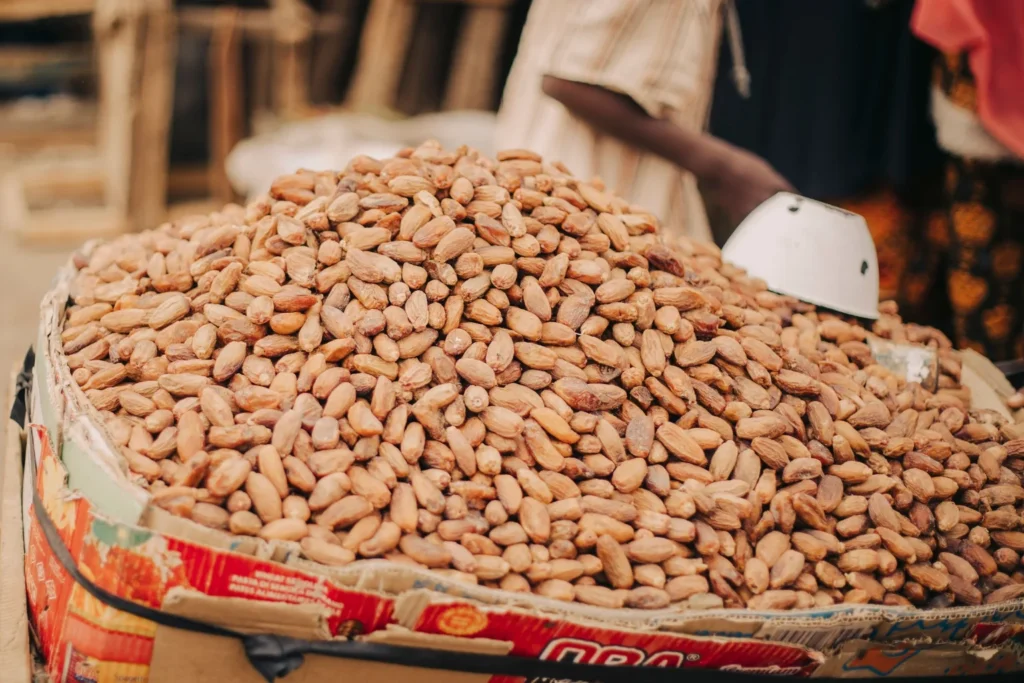
For bulk agricultural commodities, it is generally better to identify the required tests before loading the container rather than discovering the requirements after arrival.
Depending on the commodity and destination, a buyer may request:
Physical Quality Testing
- Moisture
- Purity
- Foreign matter
- Defect percentage
- Size
- Weight
- Colour
- Odour
- Insect damage
- Mould
Food-Safety Testing
- Pesticide residues
- Aflatoxins
- Salmonella
- Heavy metals
- Other contaminants specified by the destination market
Documentation Checks
- Commercial invoice
- Packing list
- Certificate of origin
- Phytosanitary certificate where applicable
- Fumigation certificate where applicable
- Inspection certificate
- Certificate of weight and quality
- Bill of lading
- Other destination-specific documents
NEPC identifies phytosanitary, fumigation, inspection, weight and quality and origin documents among the documentation used in Nigerian export processes.
Destination Market Checks
The final specification should be based on the market where the commodity will be sold or used.
European Union
EU food imports are subject to official controls, including documentary, identity and physical checks based on the relevant risk and regulatory framework.
The EU also applies Maximum Residue Levels for pesticide residues in food and feed. Buyers importing Nigerian agricultural commodities should check the applicable MRL for the exact commodity and pesticide combination rather than relying on a general “EU compliant” claim.
Destination regulator and official resources:
European Commission — Food Safety and Import Controls
United Kingdom
UK import requirements can include commodity-specific restrictions and controls.
For example, current UK government information identifies Nigerian sesame seeds under specific controls related to Salmonella.
Buyers should check the current requirements for the specific commodity, country of origin and intended use before shipment.
Destination regulator and official resource:
UK Government — Food Import Restrictions
United States
The U.S. Food and Drug Administration states that imported food must meet U.S. requirements and that importers are responsible for ensuring food is safe, sanitary and properly labelled. Imported food is subject to FDA inspection at U.S. ports of entry.
Food imports can also be subject to requirements such as facility registration, Prior Notice and Foreign Supplier Verification Program obligations, depending on the circumstances.
Destination regulator and official resources:
U.S. FDA — Importing Food Products
U.S. FDA — Prior Notice of Imported Foods
Nigerian Authorities Buyers and Exporters Should Know
Nigeria Export Promotion Council
NEPC supports Nigerian exporters and provides export documentation and quality-competent-authority information.
Nigeria Export Promotion Council
Federal Produce Inspection Service
FPIS is responsible for inspection and quality control of agricultural produce for export and conducts quality, moisture, packaging, weighing and fumigation-related controls.
Federal Produce Inspection Service
Nigeria Agricultural Quarantine Service
NAQS handles plant quarantine and phytosanitary inspection and certification for regulated plant products.
Nigeria Agricultural Quarantine Service
NAFDAC
The NAFDAC is relevant to food and other regulated products, particularly where processed or semi-processed food products and applicable health certificates are involved.
What an Overseas Buyer Should Request from a Nigerian Supplier
Before confirming a bulk shipment, the buyer should request a clear documentation and testing package appropriate to the commodity.
This may include:
- Product specification
- Recent laboratory test results
- Quality or inspection certificate
- Weight certificate
- Phytosanitary certificate where applicable
- Fumigation certificate where applicable
- Certificate of origin
- Commercial invoice
- Packing list
- Shipping documents
- Lot or batch identification
- Photos of the actual shipment
- Sampling and testing information
The exact package should be agreed before shipment.
Do not accept the phrase “all certificates available” as sufficient. Ask for the actual documents and confirm that they correspond to the shipment being purchased.
A Practical Buyer Pre-Shipment Checklist
Before the cargo is loaded, confirm:
– The commodity specification is written into the contract.
– The quality parameters are measurable.
– The sample has been approved.
– Moisture requirements are agreed.
– Foreign-matter limits are agreed.
– Defect tolerances are agreed.
– Required laboratory tests are identified.
– Destination-country MRL and contaminant requirements have been checked.
– Phytosanitary requirements have been confirmed.
– Fumigation requirements have been confirmed.
– Packaging requirements are agreed.
– Weight and quantity verification procedures are agreed.
– Required certificates have been identified.
– The inspection procedure is agreed.
– The buyer knows who pays for additional testing.
– The buyer knows what happens if the shipment fails inspection.
Why the Destination Market Matters
There is no single universal definition of “export quality”.
A specification suitable for one buyer may not be sufficient for another destination.
For example, an overseas buyer may require additional pesticide-residue testing, microbiological testing or contaminant analysis even when the product has passed Nigerian export inspection.
This is why the safest approach is to work backwards from the destination market:
Destination requirements → Buyer specification → Supplier specification → Pre-shipment testing → Export documentation → Shipment
That sequence reduces the risk of discovering a compliance problem after the cargo has already left Nigeria.
Conclusion
For overseas buyers sourcing Nigerian cocoa, cashew and sesame, quality is only one part of the transaction.
The buyer needs to know:
- What quality is being purchased.
- How that quality will be measured.
- Which tests are required.
- Which documents must accompany the shipment.
- Which Nigerian authorities are involved.
- Which destination-country rules apply.
- What happens if the cargo fails inspection.
For cocoa, attention commonly centres on bean defects, moisture, mould, slatey beans, foreign matter and grade.
Then for cashew, buyers commonly focus on moisture, nut count, outturn, defects, foreign matter and infestation.
For sesame, purity, moisture, foreign matter, oil content and food-safety controls can be particularly important.
The most reliable transaction is one where the buyer and supplier agree on measurable specifications before payment and shipment, then verify those specifications using appropriate inspection, laboratory testing and documentation.
Standards and import controls can change. Buyers should always verify the current requirements with the relevant destination regulator before shipping.
Sources and Official References
Nigeria
Nigeria Export Promotion Council — Export Documents and Procedures
Federal Produce Inspection Service
Nigeria Agricultural Quarantine Service
European Union
United Kingdom
UK Government — Foodstuffs with GB Import Restrictions
United States