
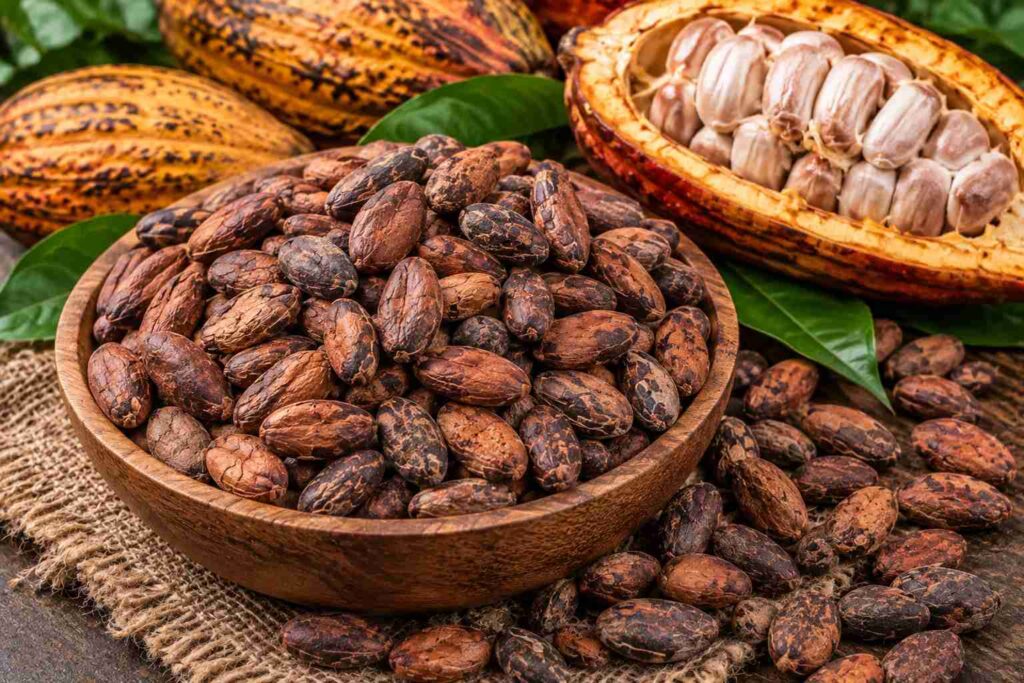

Understanding the cocoa season in Nigeria is only one part of planning an agricultural commodity purchase. Cocoa, cashew and sesame each follow different production patterns, and the period when farmers harvest a crop is not necessarily the same as the period when a buyer can source a particular grade, quantity or specification.
Buyers should use seasonality as a guide for planning their purchases rather than treating it as a fixed trading calendar. Harvest timing can vary by region and year, while post-harvest handling, storage and aggregation can extend commercial availability beyond the main harvest period. Weather can also affect crop development, harvesting and movement.
This guide explains how to think about cocoa, cashew and sesame availability in Nigeria, what the typical seasonal pattern means for procurement, and how to build a buying calendar that is flexible enough to accommodate regional and weather-related variation. The aim is not to tell buyers one supposedly perfect month to purchase, but to help them plan when to monitor supply, request samples, verify quality and confirm actual availability.
A buying calendar should tell you when to start watching the market, not replace verification of the actual crop, specification and available lot.
Quick Answer
Cocoa, cashew and sesame have different seasonal patterns in Nigeria. Cocoa generally produces a main crop and a lighter crop, while cashew production concentrates around the early and middle parts of the year, and sesame production commonly peaks later in the year. Farmers and traders may continue supplying these commodities beyond their harvest periods by storing produce and aggregating stocks. Buyers should therefore use seasonal patterns to plan inquiries and procurement, then confirm current availability, quality and quantity with the supplier.
At A Glance
| Topic | Nigerian cocoa, cashew and sesame availability |
|---|---|
| Who it is for | Commodity buyers, processors, wholesalers, exporters and importers |
| Key commodities | Cocoa beans, raw cashew nuts and sesame seeds |
| Check first | Current crop stage, location, available lot, specification and storage condition |
| Confirm with an authority | Current export procedures and requirements where the transaction involves export |
| Common risk | Treating a general harvest period as a guarantee of immediate supply |
| Next step | Build a seasonal monitoring plan and verify actual supply before ordering |
Why Commodity Availability Needs Context
A harvest season and a buying season are not always the same thing.Farmers often harvest over several weeks or months before drying, sorting and storing their produce. Traders then aggregate the produce and move it through the supply chain.
This means a buyer may find a commodity after the main harvest has ended, while the quality, quantity and commercial conditions of that stored stock may differ from newly harvested material.
Regional differences also matter. Nigeria has multiple production zones, and rainfall, temperature, farm practices and crop development do not occur identically across the country. NiMet’s seasonal climate prediction programme provides farmers with agricultural information on rainfall, temperature, growing-season duration and crop calendars. This information helps farmers and buyers align agricultural planning with prevailing weather conditions rather than relying on fixed annual schedules.
For export-oriented buyers, seasonal changes also influence logistics planning and the preparation of required export documentation. A buyer planning a shipment should allow time for sourcing, quality checks, aggregation, inspection, documentation and transport rather than assuming that the beginning of harvest immediately means export-ready cargo.
Nigerian Export Promotion Council export procedures should check when planning an export transaction because documentation and procedures can change. A seasonal calendar is useful for procurement planning, but it should not replace current regulatory verification.
The Core Problem Buyers Face
Buyers often ask, “What month is this commodity available?” The better question is, “When should I begin monitoring supply, and what evidence should I require before committing to a purchase?” The distinction matters because harvest timing, regional variation, storage and aggregation can all affect what is physically available to buy at a particular moment.
Understanding the Nigerian Commodity Calendar
A useful calendar separates at least four stages: crop development, harvest, post-harvest handling and commercial availability.
Crop development
This is the period when the crop is developing before harvest. Weather conditions during this stage can influence eventual availability and quality.
Harvest
Harvest is when farmers begin collecting the mature crop. It is usually the point at which fresh supply starts entering local markets more actively.
Post-harvest handling
After harvest, commodities may be fermented, dried, cleaned, sorted, graded or otherwise prepared depending on the crop. This stage is critical because poor handling can reduce the value of an otherwise promising crop.
Commercial availability
This is the period during which buyers can actually obtain the required commodity in the desired quantity and specification. It may extend beyond the main harvest because of storage and aggregation.
Separating these stages prevents a common procurement mistake: assuming that “harvest season” automatically means “ready for my shipment”.
Cocoa Season in Nigeria
Nigeria’s cocoa production has a principal harvest period and a lighter crop period. The International Cocoa Organization identifies Nigeria’s main cocoa crop broadly around September to March, with a mid-crop around May to August. A separate Nigeria cocoa sector assessment prepared for the International Cocoa Organization describes the main crop campaign broadly from October to February and the light crop from April through September, while noting that regional weather patterns can extend the light crop.
These descriptions should not be interpreted as a promise that every cocoa-producing area will follow precisely the same timetable. Cocoa harvests develop across regions, and weather can alter the timing and intensity of pod maturity.
Main crop
The main crop generally represents the more important production period. For a buyer, this can be a useful time to increase market monitoring, communicate requirements to suppliers and begin assessing available lots.
However, increased supply does not automatically mean that every grade or quality specification will be available. A buyer seeking a particular bean condition, moisture specification or other quality characteristic should still request a current sample.
Light crop
The lighter crop provides another period of production, although volumes and timing can vary by region and year. light crop should therefore be treated as an additional sourcing window rather than an identical second version of the main crop.
For buyers planning annual procurement, this creates an important advantage: the sourcing plan does not have to be built around a single harvest event. It can monitor both crop periods while allowing for differences in volume and quality.
NEPC’s current cocoa market information also describes Nigerian cocoa supply as extending across a relatively long production period, reinforcing the point that a calendar should be used as a broad planning framework rather than a single purchase date.
Buyers who want to go deeper into the physical characteristics of commodities should also review Nigerian cocoa export quality standards before finalising a specification.
Cashew Season in Nigeria
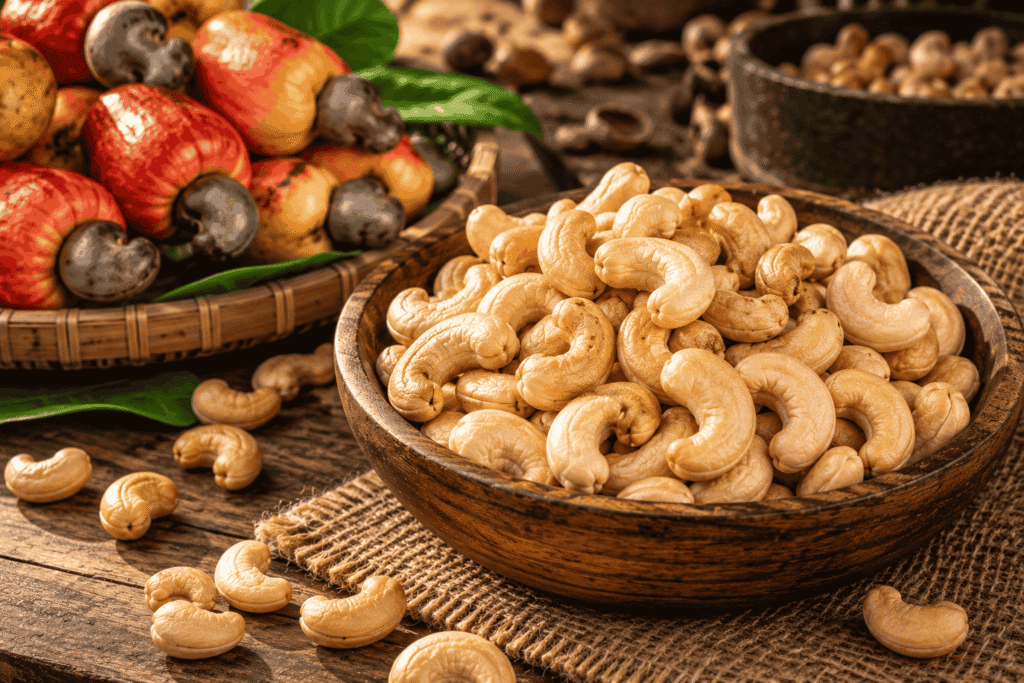
Cashew follows a different seasonal pattern from cocoa. NEPC describes Nigeria as having a relatively long cashew-producing season running broadly from December to June, while noting that storage means export activity can continue outside the immediate harvest period. :chatgpt-content-reference{index=”4″}
NEPC’s cashew profile also identifies an early crop from February to April. Buyers should confirm the exact harvest and supply periods with suppliers in each producing area, as local conditions can influence when farmers begin delivering large volumes of nuts.
Why the cashew calendar matters
Cashew buyers need to distinguish between the arrival of fresh raw cashew nuts and the availability of stored or processed material. Raw cashew nuts come directly from the harvest, while cashew kernels undergo processing and follow a separate supply chain.
This distinction matters when writing a purchase specification. A buyer looking for raw cashew should ask about the current crop, collection area, drying, storage and quality characteristics. A buyer looking for kernels should focus additionally on processing grade, kernel condition, packaging and the processor’s specification.
Planning around the cashew crop
Buyers can begin supplier conversations before the expected harvest window, particularly when they need meaningful volumes. Early communication allows the buyer to communicate the intended specification and allows the supplier to explain what is likely to be available.
As harvest progresses, the buyer should shift from general planning to evidence-based procurement: obtain samples, confirm the actual available quantity and assess the lot against the agreed specification.
For international procurement, it is also important to remember that Nigeria’s raw cashew supply chain includes local aggregators, processors and exporters. The product being offered may therefore have passed through several stages between farm and buyer.
Sesame Harvest Season in Nigeria
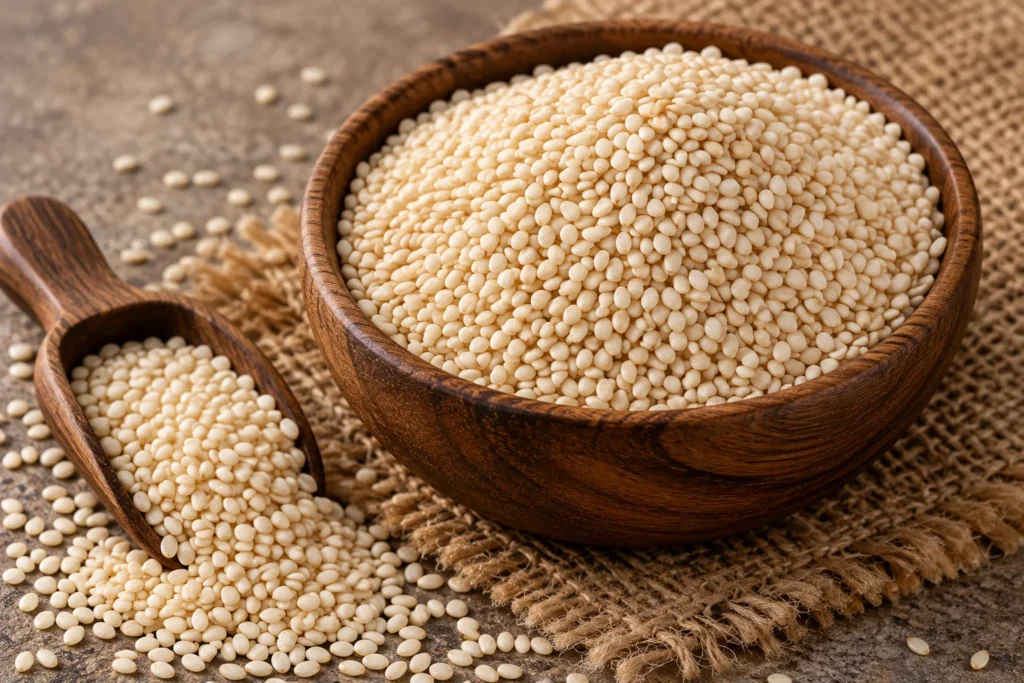
Sesame has a different production geography and seasonal pattern from cocoa and cashew. NEPC describes Nigerian sesame production as concentrated across northern and central parts of the country and notes that storage and the length of the producing season can make sesame available for export beyond the immediate harvest period.
For buyers, the practical point is that the appearance of sesame in the market does not necessarily tell you whether it is newly harvested or stored from an earlier crop. That distinction can matter when quality, moisture, purity and storage history are important to the purchase.
New crop monitoring
As the sesame harvest approaches, buyers should begin monitoring production areas and supplier availability. New-crop enquiries should specify whether the buyer requires freshly harvested material or whether properly stored existing stock is acceptable.
Post-harvest preparation
Sesame commonly passes through cleaning, sorting and other preparation before reaching an export buyer. The specification should therefore state whether the buyer requires raw, cleaned or otherwise processed seed.
Storage and availability
Stored sesame can remain commercially available after the main harvest period. However, availability should not be confused with guaranteed suitability. A buyer should still inspect the current lot and confirm the required quality characteristics.
For procurement planning, this means the sesame calendar should contain both a new-crop monitoring period and a stored-stock verification period.
Seasonal Buying Calendar for Cocoa, Cashew and Sesame
| Commodity | Typical seasonal pattern | What buyers should do |
|---|---|---|
| Cocoa | Main crop broadly around the later part of the year into early year; lighter crop broadly follows later in the year, with regional variation. | Monitor both crop periods, request current samples and verify fermentation, drying, storage and specification. |
| Cashew | Production commonly spans the early to middle part of the year, with timing varying by producing area. | Begin enquiries before expected arrivals, then verify actual raw nut availability and quality during the crop. |
| Sesame | Harvest is commonly associated with the later part of the year, while stored stocks may remain available afterwards. | Monitor new crop, distinguish new from stored stock and confirm purity, cleanliness, moisture and storage condition. |
The periods above are planning ranges, not fixed guarantees. Actual harvest and availability can vary by region and year. Buyers should confirm the current position with suppliers and relevant agricultural or trade information before committing to a purchase.
How Harvest Timing Affects Buying
Fresh crop versus stored crop
A buyer should know whether the supplier is offering newly harvested material or stock carried from an earlier period. The difference can affect the way the product is assessed and the questions asked about storage.
Quality can change through the chain
Harvesting is only one stage. Drying, fermentation, cleaning, grading, bagging, transport and storage can all influence the condition of the commodity. Therefore, the harvest month alone cannot establish quality.
Availability can lag behind harvest
Commercial quantities may not become available immediately when harvesting begins. Farmers and aggregators may need time to collect, dry, sort and consolidate produce. A buyer with a shipment deadline should build these stages into the procurement plan.
Regional supply can differ
When one producing area is approaching the end of its crop, another area may still have available supply. Buyers should therefore avoid treating Nigeria as a single uniform production zone.
Building a Buying Calendar That Actually Works
A useful buying calendar should be an operating document rather than a decorative list of months.
Step 1: Mark the broad crop window
Begin with the general seasonal pattern for the commodity. This tells your procurement team when to begin paying closer attention to the market.
Step 2: Add the producing regions
Identify the states or regions relevant to the quality and quantity you require. The calendar becomes more useful when it distinguishes regional supply rather than treating the whole country as one production area.
Step 3: Add a supplier-monitoring period
Start supplier communication before the expected peak. Ask what is currently available, what crop the stock belongs to and what specifications can realistically be supplied.
Step 4: Add the inspection period
Allow time for sample collection and assessment. If laboratory analysis or independent inspection is required, include that stage before the commercial deadline.
Step 5: Add logistics
Transport, documentation, aggregation and loading all take time. A buyer should not set the procurement date so close to the required delivery date that any normal verification delay becomes a crisis.
Step 6: Review the calendar annually
Do not copy the previous year’s dates without checking current conditions. Weather patterns and production timing can change, which is why agencies such as NiMet publish annual seasonal climate information relevant to agriculture.
Planning Around Regional and Weather Variation
Seasonality is influenced by weather, and weather does not respect a procurement spreadsheet. Rainfall timing, dry spells and temperature can influence crop development, harvesting and post-harvest handling.
For cocoa, for example, the main and light crops can differ by region. The Nigeria cocoa sector assessment prepared for ICCO notes differences between the South-West and South-South in the timing and duration of the light crop.
This is why buyers should avoid statements such as “the crop always starts on this date”. A better procurement note is: “The crop is typically expected around this period; confirm current availability with suppliers in the relevant production area.”
Weather information can also help buyers anticipate operational risks. NiMet’s seasonal prediction system provides rainfall onset and cessation information, temperature forecasts, dry-spell information and crop-calendar information. These forecasts are useful planning inputs but should not be treated as guarantees of a particular supplier’s inventory.
When Is the Best Time to Buy?
There is no universally correct month to buy cocoa, cashew or sesame. The best time depends on what the buyer is optimising: fresh crop availability, a particular quality specification, volume, storage capacity, processing requirements, destination schedule or supply continuity.
A processor may prefer to purchase when the desired raw material is entering the market. Another buyer may accept properly stored stock outside the main harvest. An exporter planning a shipment may need to begin sourcing earlier to allow for aggregation and verification.
Therefore, “best time” should be replaced with “best procurement window for this specification”. That is a much stronger question because it connects timing to the actual commercial objective.
Buyers should also avoid assuming that a large harvest automatically means the lowest commercial cost. Market conditions, demand, storage, quality differences and logistics can all influence the commercial outcome. This guide deliberately does not provide price predictions.
How to Plan Cocoa, Cashew and Sesame Purchases Together
One advantage of a multi-commodity procurement plan is that the crops do not follow identical calendars. When cocoa is moving through one stage, cashew or sesame may be entering another stage.
A buyer handling several commodities can therefore create a rolling annual workflow:
- Monitor the crop approaching its expected production window.
- Contact suppliers before the expected peak.
- Define or refresh the product specification.
- Request representative samples.
- Verify actual quantity and quality.
- Confirm packaging, documentation and logistics.
- Record the transaction and review supplier performance for the next cycle.
This approach transforms a seasonal calendar into a repeatable procurement system. It also creates useful historical information: which regions supplied on time, which specifications were consistently available and where quality variation occurred.
For buyers moving from domestic procurement into international transactions, the guide to importing agricultural products from Nigeria provides the next layer of planning around inquiry, inspection, documentation and shipping.
Seasonality and Quality Verification
Timing should influence when you inspect, not whether you inspect.
During a new crop period, buyers may pay particular attention to drying, handling and preparation because newly harvested commodities still need to move through the relevant post-harvest stages. With stored stock, the buyer should ask additional questions about storage conditions, duration and lot identification.
For cocoa, this may include questions about fermentation and drying. For cashew, raw nut condition, drying and storage may be relevant. For sesame, cleaning, purity and moisture characteristics can be important depending on the buyer’s specification.
None of these should be assumed simply from the month of purchase. The current lot remains the object being bought.
Common Mistakes And How To Fix Them
- Mistake: Treating harvest dates as exact. Correction: Use broad seasonal windows and verify regional conditions. Why it matters: Weather can shift crop timing.
- Mistake: Assuming harvest equals immediate availability. Correction: Allow time for collection, drying, grading and aggregation. Why it matters: Physical crop availability and export-ready stock are different stages.
- Mistake: Ignoring stored stock. Correction: Ask whether the offered lot is new crop or previously stored. Why it matters: Storage history affects how the lot should be assessed.
- Mistake: Treating Nigeria as one production zone. Correction: Identify the relevant producing region. Why it matters: Crop timing can vary geographically.
- Mistake: Using last year’s calendar without review. Correction: Update the calendar using current seasonal and supplier information. Why it matters: Agricultural timing can change from year to year.
Red Flags To Watch For
- A supplier gives an exact harvest date as a guarantee without explaining regional or weather variation.
- The supplier cannot identify whether the offered stock is new crop or stored stock.
- A commodity is described as “available” without confirming the actual quantity and specification.
- The buyer is encouraged to commit before receiving a current sample.
- The proposed procurement schedule leaves no time for inspection, documentation or aggregation.
Action Checklist
Before You Plan
- Identify the commodity and intended specification.
- Mark the broad seasonal production window.
- Identify relevant production regions.
- Review current weather and agricultural information where relevant.
- Allow time for post-harvest handling and aggregation.
During The Season
- Confirm actual crop progress with suppliers.
- Ask whether stock is new crop or stored.
- Request representative samples.
- Verify quantity, quality and storage condition.
- Confirm current export and documentation requirements where applicable.
Frequently Asked Questions
When is cocoa season in Nigeria?
Nigeria has a main cocoa crop and a lighter crop. Broadly, the main crop falls around the later part of the year into early year, while a lighter crop follows later. Exact timing varies by region and year, so buyers should confirm current crop conditions.
When is cashew season in Nigeria?
NEPC describes Nigeria’s cashew-producing season broadly from December to June, with an early crop identified around February to April. Actual arrivals vary by producing area and year, so current supply should be confirmed with suppliers.
When is sesame harvested in Nigeria?
Sesame is commonly associated with harvest activity in the later part of the year, although production timing varies. Stored sesame may remain commercially available afterwards. Buyers should confirm whether an offered lot is new crop or stored stock.
What is the best time to buy cocoa in Nigeria?
There is no universal best month. The appropriate buying window depends on the required quality, quantity, destination and storage needs. Buyers should monitor the main and lighter crop periods and verify the actual lot before purchasing.
What is the best time to buy cashew in Nigeria?
Buyers commonly monitor the early-to-middle-year cashew crop, but the exact procurement window depends on region, crop development and specification. Start supplier discussions early enough to allow sampling, aggregation and quality verification.
What is the best time to buy sesame in Nigeria?
New-crop sesame is generally monitored toward the later part of the year, while stored stock can remain available afterwards. The right window depends on whether you require new crop, a particular quality specification or continuous supply.
Does harvest season guarantee commodity availability?
No. Harvesting is only one stage in the supply chain. Produce may need to be collected, dried, cleaned, graded, stored and aggregated before a particular quantity becomes available. Confirm actual stock rather than relying only on the calendar.
Can weather change Nigeria’s crop seasons?
Yes. Weather affects agricultural timing, and conditions can differ by region and year. NiMet publishes seasonal climate information relevant to agriculture. Buyers should use such information for planning while confirming actual crop progress locally.
Request A Quote
If you are planning a bulk purchase of cocoa, cashew or sesame, send a quotation request with the commodity, quantity, destination, preferred specification and intended procurement period. This allows the supplier to respond against a clear requirement rather than a general seasonal enquiry.
Conclusion
A commodity buying calendar is most useful when it creates a sequence of decisions rather than a promise about exact dates. Cocoa, cashew and sesame each have recognisable seasonal patterns in Nigeria, but regional conditions, weather, post-harvest handling and storage mean that actual availability must still be verified.
Use the DORAMAC method: Understand the crop cycle, Specify the product you need, Verify current availability and quality, Confirm the commercial and regulatory requirements, then Ship when the necessary checks are complete. The strongest buying calendar is therefore not the one with the most precise dates. It is the one that tells your team when to start monitoring, what to verify and when to make the next decision.
Verify Before You Trade
Important: Regulations, quality limits, entry requirements, seasonal availability and official notices can change. Use DORAMAC for research and context, then confirm current requirements with the relevant official authority or an accredited inspection body before making formal trade decisions.
 Oron Crayfish Quality Guide: How to Grade, Inspect and Store Before You Buy
 The Bulk Buyer’s Checklist: 10 Things to Confirm Before You Pay a Nigerian Commodity Supplier