
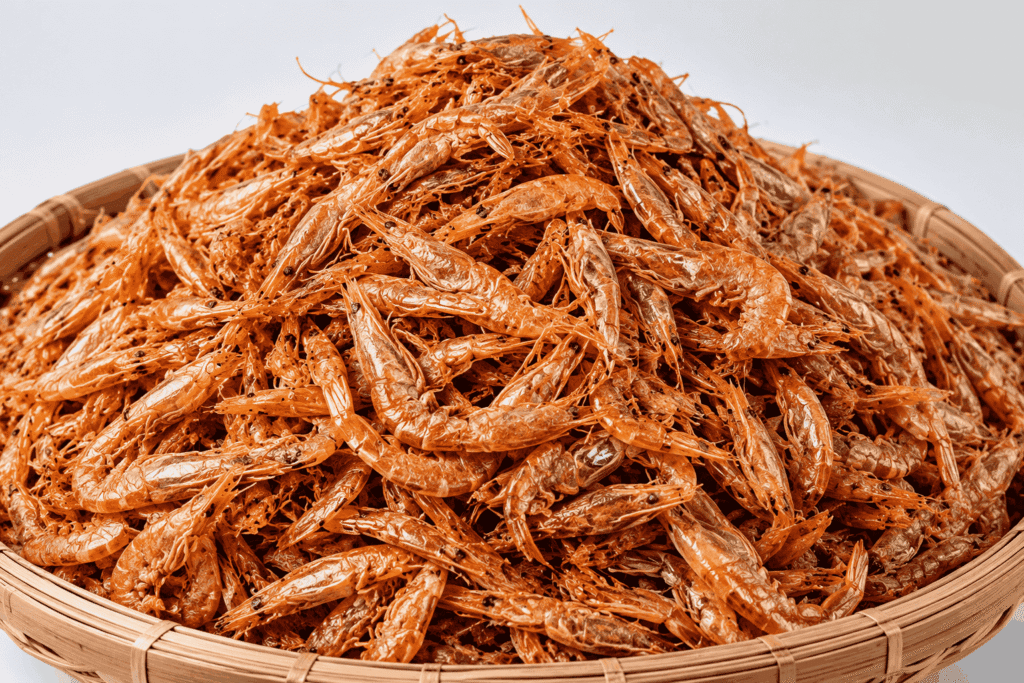

If you want to know how to check dried crayfish quality before buying in bulk, start with more than appearance. Dried crayfish can vary in size, colour, dryness, cleanliness, handling and packaging, and a visually attractive sample does not automatically represent the quality of an entire lot.
For buyers, the real task is to identify the characteristics that matter to the intended use, agree how those characteristics will be assessed, and then make sure the bulk lot matches the approved specification. This becomes especially important when buying quantities that will be stored, resold, processed or transported over a distance.
This guide explains how to assess Oron crayfish systematically, from size and colour through moisture, smell, cleanliness, packaging and storage. It also explains where visual inspection has limits and when a buyer should request additional testing or independent inspection rather than relying on appearance alone.
Good crayfish buying starts by defining what acceptable quality means, then verifying that the sample, bulk lot, packaging and storage conditions all support that specification.
Quick Answer
To check dried crayfish quality, inspect the sample for consistent size and appearance, acceptable colour, appropriate dryness, characteristic smell, cleanliness and freedom from visible contamination or obvious spoilage. Then examine the packaging and storage conditions. For bulk purchases, agree the specification before ordering and consider appropriate inspection or testing where visual checks cannot establish a required characteristic.
At A Glance
| Topic | Oron crayfish quality and bulk purchasing |
|---|---|
| Who it is for | Wholesalers, retailers, food businesses and bulk buyers |
| Key checks | Size, colour, dryness, smell, cleanliness, packaging and storage |
| What to check first | Representative sample, product condition and agreed specification |
| What requires confirmation | Any numerical moisture, microbiological, contaminant or regulatory requirement |
| Common risk | Buying against appearance alone without defining the complete specification |
| Next step | Approve a representative sample and record the agreed quality requirements |
Why Dried Crayfish Quality Needs Context
Dried crayfish belongs to the wider category of dried aquatic products. Codex’s food-category database places dried shellfish and related dried fish products within the broader category of smoked, dried, fermented and/or salted fish and fish products, including crustaceans.
Drying changes the product and its storage characteristics, but it does not mean that every dried product is automatically safe or suitable for every purpose. Food safety depends on the raw material, processing, drying, handling, packaging and subsequent storage. FAO guidance notes that drying stability is linked to sufficiently reducing water activity and that problems can occur when drying takes too long or conditions allow microbial growth.
That is why a buyer should avoid using a single visual feature as a universal grading rule. A particular colour may be normal for one lot, while unusual darkening, visible mould, an objectionable odour or evidence of contamination can indicate a problem that needs investigation.
Requirements also vary according to how the product will be sold and where it will be used. NAFDAC publishes food guidelines covering food safety, hygienic practices and related requirements, so buyers should confirm the current requirements applicable to their particular product and transaction.
The Core Problem Buyers Face
The common mistake is to ask whether a bag of crayfish “looks good”. A better question is whether the product meets a clearly defined specification. A buyer needs to know what size, appearance, dryness, cleanliness, packaging and storage condition are acceptable before deciding whether a lot is suitable. Without that definition, different suppliers can use the same words to describe materially different products.
What Oron Crayfish Quality Actually Means
Quality is not one characteristic. For bulk buying, it is better understood as a combination of physical condition, cleanliness, dryness, sensory characteristics, packaging and handling history.
A useful specification should distinguish between characteristics that can be checked visually and characteristics that require measurement or testing. Size distribution, visible foreign matter and obvious physical damage may be assessed during inspection. A numerical moisture requirement, microbiological condition or contaminant level may require an appropriate test rather than visual judgement.
This distinction is important because buyers sometimes ask for a particular moisture percentage or other numerical limit without establishing whether that figure is appropriate for the specific product and market. Unless the requirement has been verified for the transaction, it is safer to state that the specification should be confirmed with the buyer, destination regulator or inspection body.
For bulk purchasing, the objective is therefore not to create an artificial universal grade. It is to create an agreed description that both buyer and supplier can understand and verify.
How to Check Dried Crayfish Quality
1. Inspect size and consistency
Size is often one of the first characteristics buyers notice. However, a buyer should decide whether the requirement is for relatively uniform pieces or whether a broader size distribution is acceptable.
Look across the sample rather than selecting individual pieces. A sample containing mostly large pieces with a significant amount of much smaller material may behave differently from a lot with relatively consistent sizing.
For resale, presentation may influence the buyer’s specification. For processing or grinding, size uniformity may have a different commercial importance. The intended use should therefore determine how much emphasis you place on size.
2. Examine colour
Colour can provide useful information, but it should never be treated as a stand-alone proof of quality. Compare the overall appearance of the sample and look for unusual variation, discolouration or visible signs that suggest deterioration.
Do not assume that the brightest or most attractive colour is automatically the best. Natural variation can occur, and colour may be influenced by handling and drying conditions. The important question is whether the appearance is consistent with the agreed product specification and free from obvious signs of spoilage or contamination.
3. Assess dryness and moisture carefully
Moisture is particularly important for a dried product because inadequate drying or subsequent moisture exposure can affect stability during storage.
A simple touch or visual examination may provide an initial indication, but it does not establish a precise moisture value. If your purchase specification includes a numerical moisture requirement, use an appropriate measurement method and confirm the acceptable limit with your buyer, inspection body or relevant authority.
Watch for signs that the product has absorbed moisture after drying. Clumping, softness, unusual texture or deterioration of the packaging may justify closer investigation.
Do not invent a moisture percentage simply because a particular number is commonly repeated in informal commodity trading. A specification should be tied to the actual product and intended market.
4. Check smell
A characteristic smell can help distinguish an acceptable dried seafood product from one that may have deteriorated. The product should not have an obviously objectionable or abnormal odour.
Smell should be assessed alongside other characteristics rather than in isolation. Strong odours from packaging, storage areas or nearby materials can complicate sensory assessment, so inspection should take place in conditions that allow the product itself to be evaluated.
Codex material on dried and salted fish emphasises characteristic sensory properties and freedom from objectionable odour as part of product assessment.
5. Look for cleanliness
Cleanliness is not simply about whether the crayfish looks attractive. Examine the sample for visible foreign matter, unwanted material, insects, excessive debris or other contamination.
Inspect the product and the packaging together. A clean-looking sample taken from the top of a poorly handled bag does not establish the condition of the entire lot.
For a substantial purchase, ask how the product was cleaned, sorted and packed. If the supplier cannot explain the process clearly, the buyer has less information with which to judge consistency.
6. Look for visible spoilage
Visible mould or other obvious signs of deterioration should be treated as a serious warning rather than something to be removed manually and ignored. Codex guidance for relevant dried fish products identifies visible fungal growth and other signs of spoilage as quality and safety concerns.
If spoilage is suspected, do not assume that discarding the visibly affected pieces makes the remaining product acceptable. The appropriate response depends on the nature and extent of the problem and may require professional assessment.
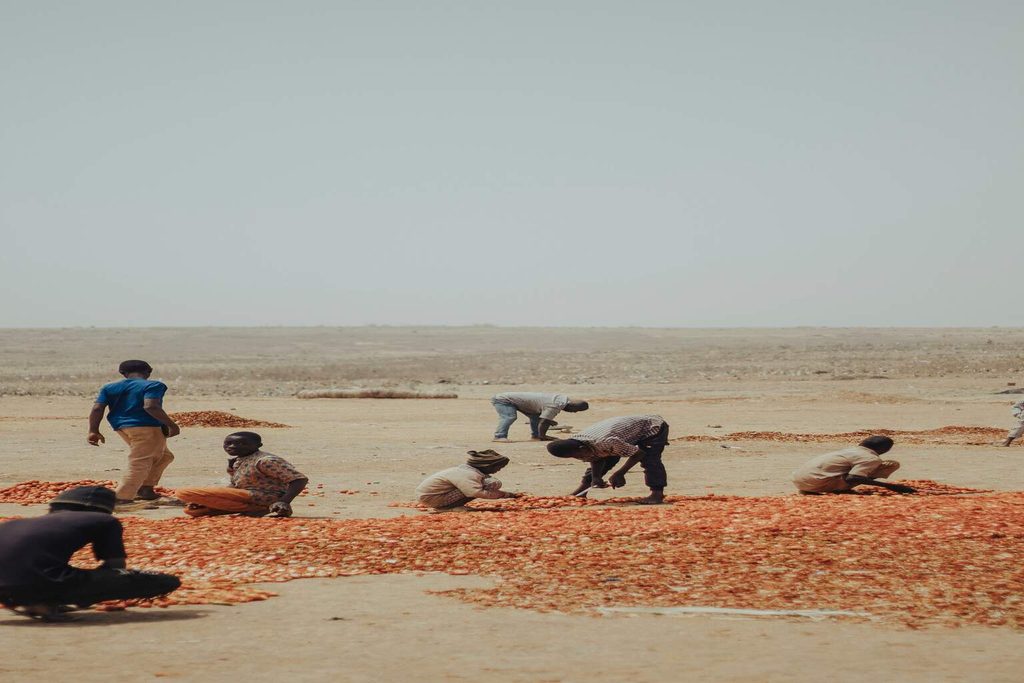
Oron Crayfish Grading and Inspection Table
| Characteristic | What to inspect | Buyer consideration |
|---|---|---|
| Size | Overall size distribution and consistency | Agree whether uniform sizing is required for the intended use |
| Colour | Overall colour and unusual discolouration | Judge against the approved sample and agreed specification |
| Moisture | Signs of dampness, softness or moisture exposure | Use appropriate testing when a numerical limit matters |
| Smell | Characteristic odour and unusual smells | Investigate objectionable or abnormal odours |
| Cleanliness | Foreign matter, debris, insects and contamination | Inspect a representative sample rather than one selected piece |
| Physical condition | Breakage, deterioration and unusual texture | Assess against the agreed product purpose |
| Packaging | Integrity, cleanliness and protection from moisture | Packaging should suit handling and storage conditions |
| Storage | Dryness, cleanliness and protection from contamination | Good product can deteriorate under poor storage conditions |
Inspect the Sample Before Inspecting the Price
For a serious bulk purchase, the sample should be part of the buying process rather than an optional extra.
Ask for a representative sample and establish how it was selected. If the sample is taken from only the most attractive material available, it may not represent the lot that will eventually be supplied.
When the sample arrives, record the characteristics that influenced your decision. This can include photographs, notes about appearance and an agreed written specification. The record should be detailed enough for another person to understand why the sample was accepted.
Do not treat sample approval as a guarantee that the entire bulk order will automatically match it. The purpose of sample approval is to create a reference point. For larger or higher-risk transactions, consider an appropriate inspection process that checks the actual lot.
Moisture, Smell and Cleanliness: The Three Checks Buyers Should Not Rush
These characteristics are closely connected to handling and storage, which makes them particularly important for dried products.
Moisture
The product needs to remain appropriately dry for its intended storage conditions. However, “dry” is not a sufficient technical specification where a numerical requirement is necessary. Use suitable measurement and confirm the applicable limit.
Smell
Smell can identify an obvious problem that might not be visible. An abnormal or objectionable odour should prompt investigation rather than being masked by repacking or mixing.
Cleanliness
Cleanliness should be assessed across a representative sample. Look beyond the first layer of a bag and examine whether the lot is consistent.
These checks work best together. A lot that looks clean but has an unusual smell requires further attention. A lot that smells acceptable but has visible contamination also requires attention. Quality assessment should therefore be cumulative rather than based on one favourable characteristic.
How Packaging Affects Dried Crayfish Quality
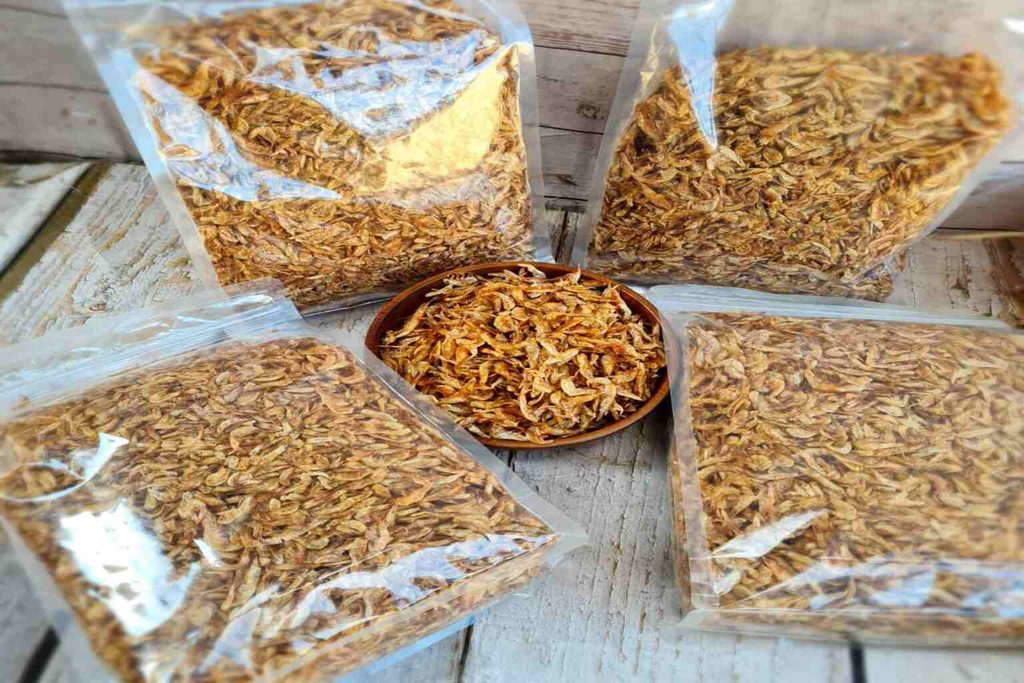
Packaging is part of quality control because the product can change after it leaves the processing or sorting point.
Packaging should protect the crayfish from avoidable contamination and moisture exposure during handling, storage and transport. The exact packaging format should be agreed according to the quantity, destination, storage environment and intended use.
Inspect bags, sacks or other containers for damage, visible contamination, dampness and signs that they have been stored in unsuitable conditions. Packaging that is wet, torn or visibly compromised deserves closer inspection of the product inside.
For packaged food products, NAFDAC’s food guidance provides a useful regulatory reference point, but the requirements applicable to a specific product and transaction should always be confirmed before commercial decisions are made.
How to Store Dried Crayfish
Buying a good product is only the first half of the quality equation. Storage can either preserve the condition you purchased or create new problems.
Keep the storage environment dry
Dried products should be protected from unnecessary moisture exposure. Storage areas should be clean and suitable for the product, with packaging kept protected from conditions that could compromise its integrity.
Protect against contamination
Store the product in a way that reduces contact with dirt, chemicals, pests and other materials that could contaminate food. NAFDAC’s food hygiene guidance emphasises appropriate storage facilities and protection against contamination, with storage conditions depending on the nature of the food. :chatgpt-content-reference{index=”6″}
Do not mix questionable stock with good stock
If one batch shows signs of deterioration, do not simply mix it with another batch to make the problem less visible. Keep lots identifiable so that quality problems can be traced and assessed.
Monitor packaging
Periodically examine stored bags or containers for dampness, damage, pest activity or other changes. The condition of the packaging can provide an early warning that the storage environment needs attention.
How Long Does Dried Crayfish Last?
There is no single shelf-life period that should be applied to every dried crayfish product without considering the processing method, initial condition, packaging, storage environment and intended market.
Drying can improve storage stability, but the product can still deteriorate if it absorbs moisture, becomes contaminated or is stored under unsuitable conditions. FAO guidance on dried aquatic products highlights the importance of controlling drying and water activity because inadequate drying conditions can permit microbial growth and toxin production.
For a commercial buyer, a better question is not simply “How many months will it last?” but “Under the specified packaging and storage conditions, what shelf-life has been established for this product?” If a formal shelf-life requirement is important, confirm it with the supplier, buyer specification or appropriate testing body.
What Makes Oron Crayfish Different From Other Crayfish?
The name “Oron crayfish” is commonly used in Nigerian trade to identify a particular market product, but buyers should not assume that the name alone establishes every quality characteristic.
For commercial purchasing, the physical specification remains important. Ask the supplier to describe the product being offered, including its form, size characteristics, condition, packaging and intended use. If origin is commercially important to your buyer, document how origin will be established rather than relying solely on the product name.
This approach avoids a common procurement problem: treating a market name as if it were a complete technical specification.
When Visual Inspection Is Not Enough
Visual inspection is useful, but it has limits. A buyer cannot reliably establish every microbiological, chemical or contaminant characteristic simply by looking at a product.
If the transaction requires a specific numerical moisture limit, microbiological criterion, contaminant limit or other laboratory parameter, establish the appropriate test and acceptance criterion before ordering.
This is especially important when the product is intended for a regulated market. The relevant destination authority may impose requirements that are not visible from the product itself. Confirm those requirements before shipment rather than attempting to resolve them after arrival.
Codex provides international food standards and related guidance, while NAFDAC provides Nigerian food regulatory resources. These are useful references, but the applicable requirement should always be matched to the actual commodity, transaction and destination.
Red Flags During Inspection
- Unusual odour: Investigate before accepting the lot, particularly where the smell is clearly objectionable or inconsistent with the expected product.
- Visible mould or suspected spoilage: Do not treat visibly affected material as an issue that can simply be sorted away without further assessment.
- Unexpected moisture: Softness, clumping or damp packaging may indicate moisture exposure and should trigger closer inspection.
- Heavy variation: Large differences in size, colour or physical condition may indicate inconsistent sorting or a mixed lot.
- Compromised packaging: Torn, wet or contaminated packaging can undermine an otherwise acceptable product.
Common Mistakes And How To Fix Them
- Mistake: Judging quality by colour alone. Correction: Assess colour together with size, smell, cleanliness, dryness and physical condition. Why it matters: One visual characteristic cannot establish overall quality.
- Mistake: Assuming “dry” means a specific moisture level. Correction: Measure where a numerical specification matters. Why it matters: Visual dryness cannot establish a laboratory value.
- Mistake: Inspecting only the top of the bag. Correction: Use a representative sampling approach. Why it matters: A selected portion may not represent the entire lot.
- Mistake: Ignoring storage after purchase. Correction: Plan suitable storage before the product arrives. Why it matters: Poor storage can reduce the quality of an initially acceptable product.
- Mistake: Using an old quality limit as a universal rule. Correction: Confirm the current specification with the relevant buyer, authority or inspection body. Why it matters: Requirements can differ by product and destination.
Action Checklist
Before You Order
- Define the product and intended use.
- Specify the preferred size and acceptable variation.
- Agree the appearance and cleanliness requirements.
- Request a representative sample.
- Confirm whether laboratory or independent inspection is required.
- Agree packaging and storage expectations.
Before You Release Payment Or Shipment
- Compare the bulk lot with the approved sample and written specification.
- Confirm quantity and packaging.
- Inspect for moisture exposure, abnormal smell and visible contamination.
- Confirm any required quality or regulatory documentation.
- Ensure the storage and transport arrangements protect the product.
- Record any deviation before accepting the lot.
Frequently Asked Questions
What is the difference between Oron and other crayfish?
“Oron crayfish” is a market description used in Nigerian trade, but the name alone does not establish a complete technical specification. Buyers should still define size, appearance, cleanliness, dryness, packaging and intended use before purchasing.
How do I check dried crayfish quality?
Inspect a representative sample for size, colour, dryness, smell, cleanliness, physical condition and visible signs of spoilage. Then assess packaging and storage conditions. Use appropriate testing where a characteristic cannot be reliably established visually.
How long does dried crayfish last?
Shelf life depends on processing, dryness, packaging, handling and storage conditions. There is no single period that should be applied universally. For commercial use, confirm the applicable shelf-life specification and storage conditions for the product.
How can I tell if dried crayfish has absorbed moisture?
Look for signs such as unexpected softness, clumping, damp packaging or changes in physical condition. These observations are useful warnings but do not establish a precise moisture value. Use appropriate measurement where a numerical requirement applies.
Should dried crayfish have a strong smell?
Dried crayfish should have sensory characteristics consistent with the product. An unusual or objectionable odour should not be dismissed. Investigate the product and its storage and handling history before accepting it.
Can I grade dried crayfish by colour?
Colour can form part of an inspection, but it should not be used as the sole grading criterion. Compare the overall sample against the agreed specification and assess colour alongside size, dryness, smell, cleanliness and physical condition.
How should I store dried crayfish?
Use clean, suitable storage that protects the product from unnecessary moisture, contamination and pests. Keep packaging intact and monitor stored lots for changes. The exact conditions should reflect the product and intended storage period.
Does dried crayfish need laboratory testing?
Not every purchase requires the same level of testing. However, if your specification includes numerical moisture, microbiological, contaminant or other technical requirements, visual inspection alone may not be sufficient. Confirm the appropriate testing requirements before purchase.
Request A Quote
If you are sourcing dried crayfish in bulk, send a quotation request with the required quantity, preferred specification, destination and packaging requirements. Providing these details at the beginning gives the supplier a clearer basis for responding and gives you a stronger basis for comparing offers.
Conclusion
Good dried crayfish buying is not about finding the most attractive-looking sample. It is about understanding what quality means for your particular use, defining the specification clearly and checking whether the actual lot matches it.
Use the DORAMAC method throughout the transaction: Understand the product, Specify the characteristics that matter, Verify the sample and bulk lot, Confirm packaging, storage and applicable requirements, then Ship or receive the product with the relevant evidence recorded. Where visual inspection cannot establish an important requirement, use appropriate measurement or inspection rather than guessing.
Verify Before You Trade
Important: Regulations, quality limits, entry requirements, seasonal availability and official notices can change. Use DORAMAC for research and context, then confirm current requirements with the relevant official authority or an accredited inspection body before making formal trade decisions.
 Cocoa, Cashew and Sesame Buying Calendar: When Each Commodity Is Available in Nigeria
 The Bulk Buyer’s Checklist: 10 Things to Confirm Before You Pay a Nigerian Commodity Supplier